
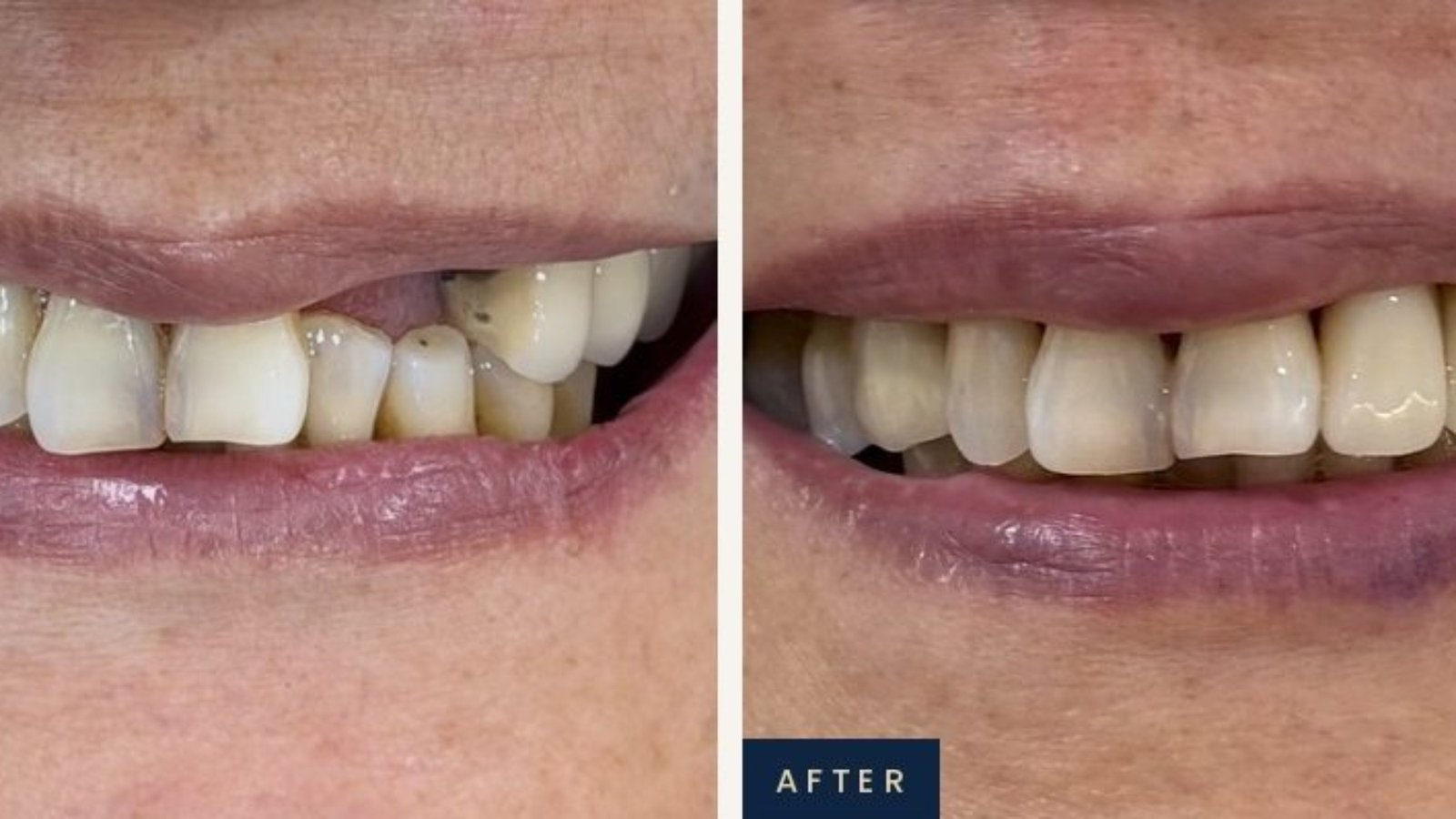
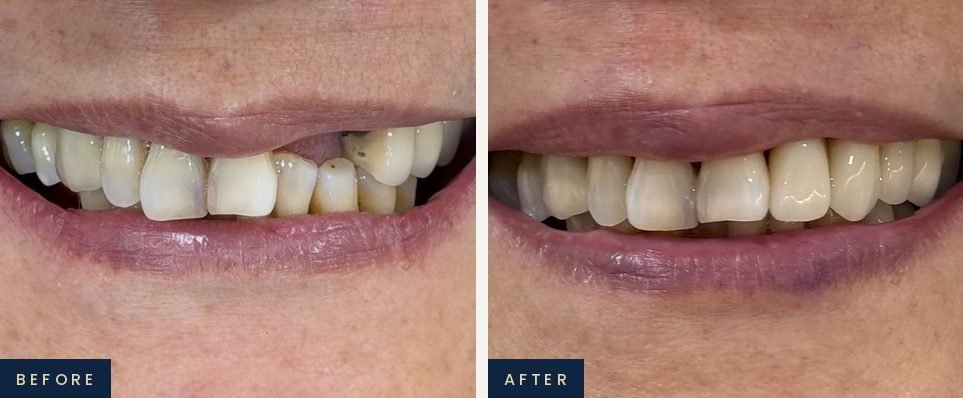
Missing two front teeth and tired of a removable denture? This case from Qualiteeth Kepong (Taman Sri Bintang) shows how two dental implants replaced the two upper front teeth of a 70-year-old patient who had worn a denture for years. Below we explain what was done, why bone rebuilding was needed, how long it took, and what to expect if you are considering the same treatment.
Reviewed by the Qualiteeth dental team · Treatment by Dr Lim Jun Yi, Qualiteeth Kepong · Updated November 2026
The case at a glance
- Patient: 70 years old, two upper front teeth lost many years ago, wearing a removable partial denture.
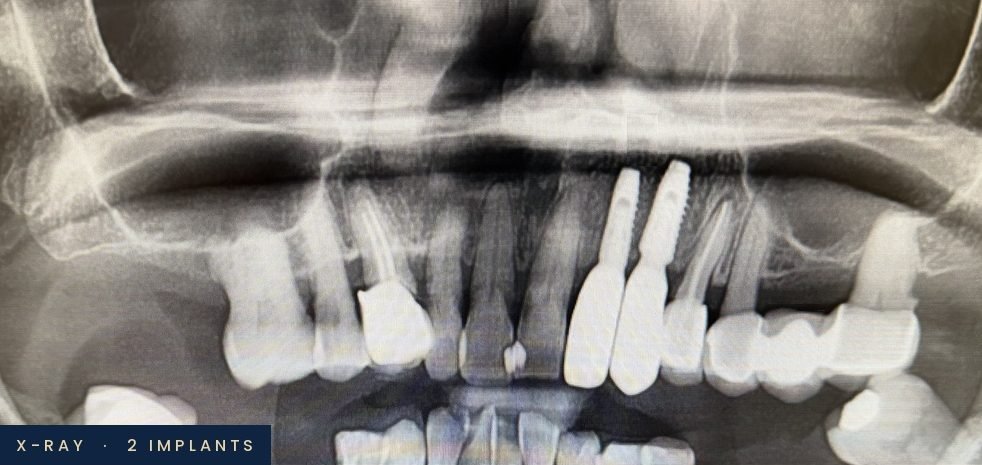
- Treatment: two dental implants (Dentium) with guided bone regeneration, then two implant crowns.
- Time from implant placement to final crowns: about 6 months.
- Dentist and branch: Dr Lim Jun Yi, Qualiteeth Kepong, 61 Jalan Seri Bintang 2, Taman Sri Bintang.
- Starting price: dental implants at Qualiteeth start from RM5,000 per tooth, including implant, abutment and crown. Bone regeneration is quoted separately after a check-up.
Why choose implants instead of a denture?
A removable denture is a quick and affordable way to fill a gap, but some people find it moves when they eat or speak, needs to be taken out to clean, and covers part of the palate. For front teeth, many patients also want something that looks and feels fixed.
An implant is a small titanium post placed in the jawbone. Once the bone has healed around it, a crown is fixed on top, so nothing needs to be removed at night. Unlike a bridge, the neighbouring teeth do not need to be filed down. If you are weighing up the options, read our comparison of implant vs bridge vs denture.
Why bone rebuilding was needed
When a tooth is lost, the bone that held it slowly shrinks over the years, especially if a denture rests on the area. In this case the teeth had been missing for a long time, so the bone was not thick enough to fully support two implants on its own.
Dr Lim used guided bone regeneration (GBR): bone graft material and a protective membrane are placed around the implants at the same visit, giving the body a framework to rebuild bone. This is one of the main reasons the treatment took around six months: the new bone needs time to mature and bond with the implants before the final crowns are fitted.
How the treatment was done, step by step
- Consultation and X-rays. The dentist checked the gums, the remaining teeth and the bite, and took X-rays to measure the available bone.
- Plan and full cost. The patient received a written treatment plan with the cost of the implants, bone regeneration and crowns before starting.
- Implant placement with GBR. Under local anaesthesia, so the area is numb, the two implants were placed and the bone was rebuilt around them.
- Healing. Over the following months the bone healed around the implants. A temporary tooth can be used so there is no visible gap during this time.
- Crowns. Once healing was confirmed, two custom crowns were made to match the shape and shade of the neighbouring teeth and fixed onto the implants.
- Review and care. The patient was shown how to clean around the implants and returns for regular check-ups and scaling.
Can you get implants at 70 or older?
Age on its own is rarely the deciding factor. What matters more is general health, gum health, the amount of bone, and how well conditions such as diabetes are controlled. Smoking slows healing and increases the risk of implant problems. At the consultation your dentist reviews your medical history and medicines, and will tell you honestly whether implants suit you or whether another option, such as a bridge or denture, would be more sensible.
What affects the cost
- Number of implants: each missing tooth usually needs its own implant, from RM5,000 per tooth at Qualiteeth.
- Bone grafting or GBR: needed when the bone has shrunk, as in this case; quoted after X-rays.
- Crown type: different crown materials are priced differently, especially for front teeth where appearance matters most.
- Other treatment first: such as gum treatment or extractions.
See our dental implants page for more on the process and pricing.
Getting implants at Qualiteeth Kepong
Qualiteeth Kepong is at 61 Jalan Seri Bintang 2, Taman Sri Bintang, open Monday to Friday 9am to 9pm and Saturday to Sunday 10am to 7pm. Implant consultations are also available at our other branches across KL and Selangor, and complex cases can be planned with our prosthodontist or periodontist.
Frequently asked questions
Can two missing front teeth be replaced with implants?
Yes. Each missing front tooth can be replaced with its own implant and crown, as in this case. In some situations one implant can support a small bridge. Your dentist will advise after checking the bone and the space available.
What is guided bone regeneration (GBR)?
GBR is a procedure that rebuilds jawbone where it has shrunk, using bone graft material and a protective membrane. It is often needed when teeth have been missing for many years, and it can usually be done at the same visit as the implant placement.
How long does it take to replace front teeth with implants?
When bone rebuilding is needed, it commonly takes around four to six months from implant placement to the final crowns. In this case it took about six months. Simpler cases with good bone can be quicker.
Will I have a gap while the implants heal?
Usually not. A temporary tooth or your existing denture, adjusted by the dentist, can be worn during healing so the gap is not visible.
How much does a front tooth implant cost in Malaysia?
At Qualiteeth, dental implants start from RM5,000 per tooth, including the implant, abutment and crown. Bone regeneration and other extra steps are quoted separately. Your dentist explains the full cost before treatment begins.
Does implant surgery hurt?
The procedure is done under local anaesthesia, so the area is numb during treatment. Some swelling or discomfort for a few days afterwards is common, and your dentist will advise on pain relief and aftercare.
Related reading
Book an implant consultation in Kepong
Find out whether implants suit you, whether bone rebuilding is needed, and the full cost before you decide.
This article describes one patient’s treatment and is general information, not a diagnosis. Results vary between individuals. Your dentist will advise you after an examination.